


What South Africa’s Gifting Habits Reveal About Love, Connection and Convenience

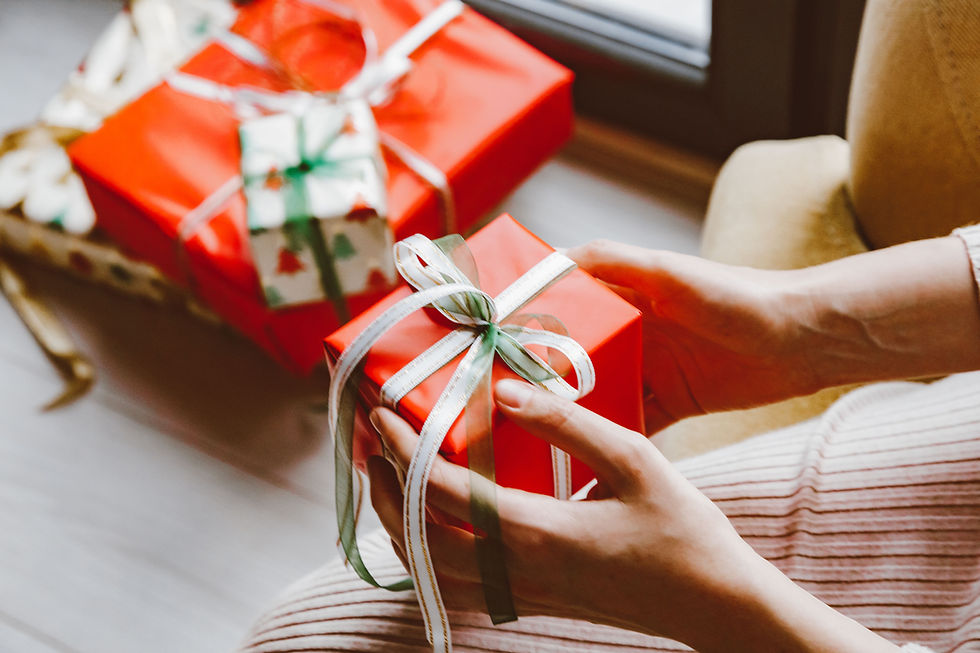
Behind every birthday bouquet, congratulations hamper, sympathy arrangement or late-night apology is something far more meaningful than a transaction. There is a relationship, a milestone or a moment when someone decided another person deserved to be acknowledged.

For Ryan Bacher, co-founder and Managing Director of NetFlorist, those moments have offered an unusual window into how South Africans express love, gratitude, support and care.
After 25 years in the gifting business, Bacher says the most interesting lessons have not necessarily been about ecommerce. They have been about people.
“I’ve spoken so much about the world of ecommerce and the dot-com boom of the 90s and early 2000s, but after 25 years in this business, what’s far more interesting to me are all the things this business and industry has taught me about human behaviour and how people connect with one another,” says Bacher.
Since launching in 1999, NetFlorist has facilitated more than 10 million gifting occasions, with each order accompanied by a personalised message card. Data from the company's orders between January and April 2026 points to several interesting patterns in how South Africans are gifting, remembering and connecting with one another.
The Numbers Behind South Africa’s Gifting Habits
70% of NetFlorist customers are women
70,800+ birthday message cards accompanied NetFlorist orders between January and April 2026
1 in 3 orders qualified for same-day delivery during the period
1 in 5 purchases were placed after 6pm
5,200+ orders were placed after 11pm
Source: NetFlorist internal order and message-card data, January-April 2026.
Women Remain the Custodians of Connection
Women's Month provides an interesting lens through which to examine gifting behaviour.
There is a common assumption that men dominate the gifting market, perhaps because of the enduring image of a man buying flowers for his partner. NetFlorist's data suggests otherwise. Between January and April 2026, around 70% of its customers were women.
Bacher believes the figure reflects a broader role women often play in maintaining relationships and remembering important occasions.
“Women are often the people remembering birthdays, organising celebrations, sending sympathy gifts and making sure important moments don't go unnoticed,” he says. “They're maintaining relationships every day. Behind many of life's important moments is someone who remembered, planned and reached out, and our customer data shows that, more often than not, that someone is a woman.”
The finding also suggests that gifting is about more than romantic relationships. From birthdays and congratulations to sympathy and support, many of the occasions that prompt a gift are tied to the everyday work of maintaining relationships.
Personalisation Has Become the New Thoughtfulness
The gift itself is only part of the experience. Increasingly, consumers want the item they send to feel as though it could not have been intended for anyone else.
Bacher says one of the most noticeable shifts he has seen over the past decade, from 2016 to 2026, has been the growing demand for personalisation.
“As consumers, we all want to own the experience,” he says. “When you personalise something, there isn't another gift exactly like it. It becomes yours and that of the person you're gifting, kind of like an expression of identity through expressions of love or gratitude.”
That shift has pushed gifting businesses beyond the traditional message card. NetFlorist has expanded its personalisation offering to include customised message cards, engraved gifts, embroidered textiles and personalised ribbons.
The underlying idea is simple: a personalised detail can turn a familiar gift into something that feels considerably more intentional.
“You can send someone a beautiful gown, or you can send them a beautiful gown with their name on it. It immediately becomes a much more special gift.”
In an increasingly personalised consumer economy, the detail itself has become part of the emotional value of the gift.
Birthdays Are a Big Deal
While Valentine's Day and Christmas remain important dates on the gifting calendar, birthdays continue to dominate.'
More than 70,800 birthday message cards accompanied NetFlorist orders between January and April 2026 alone, making birthdays the country's biggest gifting occasion during the period. That does not mean romantic occasions have lost their significance. Valentine's Day remains a major gifting peak, while anniversaries, congratulations, new babies, get-well wishes and sympathy also contribute significantly to gifting activity.
For Bacher, however, the data reveals something broader about South Africans.
“Momentous life events are more important to us than we may realise, and it shows that South Africans are a caring bunch, wanting to offer support in difficult times and a pat on the back for a great achievement,” he says.
Gifting, in this sense, becomes a way of participating in another person's life, whether the occasion is joyful, difficult or simply worth remembering.
Convenience Hasn’t Replaced Care
Perhaps one of the more interesting findings is what the data says about convenience.
It would be easy to assume that ecommerce and same-day delivery have made gifting less thoughtful. After all, if someone can order a gift in minutes and have it delivered on the same day, does the gesture become less meaningful?
The data suggests otherwise. One in three NetFlorist orders between January and April 2026 qualified for same-day delivery. One in five purchases was made after 6pm, while more than 5,200 orders were placed after 11pm.
Those late-night orders could easily be interpreted as procrastination. Someone has remembered a birthday at the eleventh hour, perhaps, or realised they have forgotten an important occasion.
Bacher sees it differently.
“People are busy, but they still want to show up for the people who matter to them,” he says. “Technology allows them to act on that thought, even if it's late at night. So, rather than replacing thoughtfulness, convenience has made it easier to act on good intentions before the moment passes.”
It is an important distinction. Convenience may change how people express care, but it does not necessarily change why they do it.
The Human Need to Connect
Across the hundreds of thousands of personalised messages accompanying gifts during the first four months of 2026, certain themes continue to emerge: love, gratitude, encouragement, celebration and support.
That suggests gifting is increasingly being treated as an expression of emotion rather than simply the delivery of a physical product.
“They remind us that every gift represents a relationship,” says Bacher. “People aren't simply sending flowers or chocolates. They're expressing appreciation, celebrating milestones, offering comfort or reminding someone they're thinking about them. Even in a world that’s overwhelmingly digitally driven, meaningful human connection remains remarkably consistent.”
That may ultimately be the biggest lesson from 25 years of gifting.
Consumer behaviour is often discussed through the language of transactions, conversion rates and purchasing patterns. But behind every order is a person making a decision about another person.
For Bacher, that human element is what has remained consistent even as the technology and retail landscape have changed dramatically.
“We're not solitary beings. We need community, because human connection is, I think, the most reliable predictor of our wellbeing. We need community, generosity and connection, especially in a world where relationships are increasingly maintained through screens and busy schedules.
So, to me, consumer behaviour isn't driven by transactions alone. More often, it's driven by a very human desire to make someone else feel seen,” he concludes.
After 25 years and more than 10 million gifting occasions, that may be the most revealing statistic of all. People are still looking for ways to say, ‘I remembered you.’


