


Apple’s Busy Week of Launches, But the MacBook Neo Is the Real Story

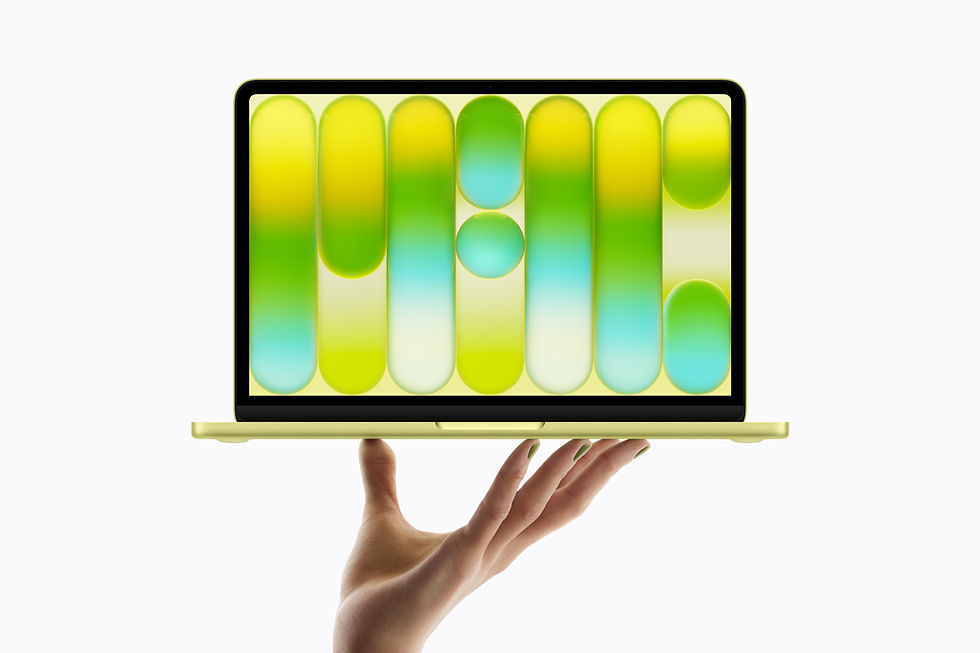
Apple had a very busy week, announcing a wave of new hardware across its lineup. We saw a new iPhone, a refreshed iPad, updated Studio Displays, and new MacBook Pros. On paper, it looks like a sweeping update across almost every major product category.
But once you look past the usual upgrades, one product stands out as genuinely interesting: the MacBook Neo.

This is a brand-new entry-level laptop designed for people who may have found the MacBook Air just a little too expensive to justify. With the Neo, Apple is pushing the Mac into a more accessible price bracket while still keeping the design and experience that people expect from a Mac.
What makes the Neo particularly interesting is the chip inside it. Apple has taken the A18 Pro processor from the iPhone 16 Pro and placed it inside this laptop. That decision says a lot about how powerful modern smartphones have become.

I recently spoke about how smartphones have reached a point where we no longer see massive year-to-year upgrades. Apple has now proven that point in an unexpected way. Phones today are so powerful that you can take the components from a flagship smartphone, place them inside a laptop chassis, and still end up with a machine that performs extremely well.
That is essentially what Apple has done here. The MacBook Neo combines the A18 Pro chip with a 13-inch aluminium body, creating a lightweight laptop that is not only significantly cheaper than most Macs, but potentially very capable too.

The design itself also tells us a lot about who Apple is targeting. The Neo comes in a range of playful colours, including Silver, Blush, Citrus, and Indigo, signalling that this machine is aimed at younger users and first-time Mac buyers rather than professionals. Apple is clearly positioning it as a fun, approachable entry point into the Mac ecosystem.
Spec Table
Specification | Detail |
Processor | A18 Pro with 6-core CPU |
GPU | 5-core integrated GPU |
Neural Engine | 16-core Neural Engine for on-device A |
Operating System | macOS Tahoe |
Memory | 8GB unified memory |
Storage | 256GB SSD (base configuration) |
Display | 13-inch Liquid Retina display, 500 nits |
Resolution | 2408 × 1506 |
Battery Life | Up to 16 hours |
Camera | 1080p FaceTime HD camera |
Audio | Dual side-firing speakers with Spatial Audio and Dolby Atmos |
Microphones | Dual microphones with directional beamforming |
Keyboard | Magic Keyboard with optional Touch ID |
Connectivity | Wi-Fi 6E, Bluetooth 6 |
Ports | 2 × USB-C (one supports external display), 3.5mm headphone jack |
Weight | 1.22 kg |
Price | R11,999 |
Why the MacBook Neo Matters

The MacBook Neo matters for Apple because it opens the door to an entirely new group of customers.
For years, Macs have largely occupied the premium end of the laptop market. With the Neo, Apple can now reach younger buyers, students, and educational institutions that may previously have chosen Chromebooks or cheaper Windows laptops.

Schools and educational centres are a particularly important market. Devices are often purchased in large volumes, and that scale can represent significant revenue over time. But the strategy goes beyond immediate sales.
Many people know that once you enter the Apple ecosystem and become comfortable with it, leaving becomes difficult. A student who starts using a MacBook in school may eventually want an iPad, an iPhone, or other Apple products later in life.
From Apple’s perspective, the Neo could be a long-term investment in future customers.
For buyers, the appeal is more immediate. Macs have always offered a strong computing experience, but the price can climb quickly, especially once you start adding more memory or storage. The Neo changes that equation by offering Apple’s computing platform in a much more affordable package.
For many users, that could be a game changer, particularly for those who never needed the full power of an M-series chip like the M2 or M3 in the first place.
Updates Across the Rest of Apple’s Lineup
The rest of Apple’s announcements this week were largely evolutionary updates.

The MacBook Air with M5 continues Apple’s thin-and-light lineup with the latest M-series chip and incremental improvements.

The MacBook Pro with M5 Pro and M5 Max pushes performance even further for professional workloads.

Apple also introduced the iPad Air with M4, which gains a significant performance boost thanks to the new chip.

On the phone side, the iPhone 17e expands Apple’s entry-level iPhone lineup and is now also available in pink, adding a slightly more playful option to the range. Personally, I still struggle to understand why this device exists. The base iPhone already offers a strong balance of performance and features, and the 16e and now the 17e continue to feel like difficult purchases to justify.

Apple also refreshed its display lineup with the Apple Studio Display and introduced the new Apple Studio Display XDR, aimed squarely at creative professionals who need extremely high-quality displays.


