


Five Smartphone Trends Redefining the Modern Phone

Updated: Feb 9

Technology changes every year, but one of the clearest ways to track where it is headed is by looking at the device most of us use every single day: our phones. Five years may not sound like a long time on paper, yet in smartphone terms, it might as well be a generation ago.
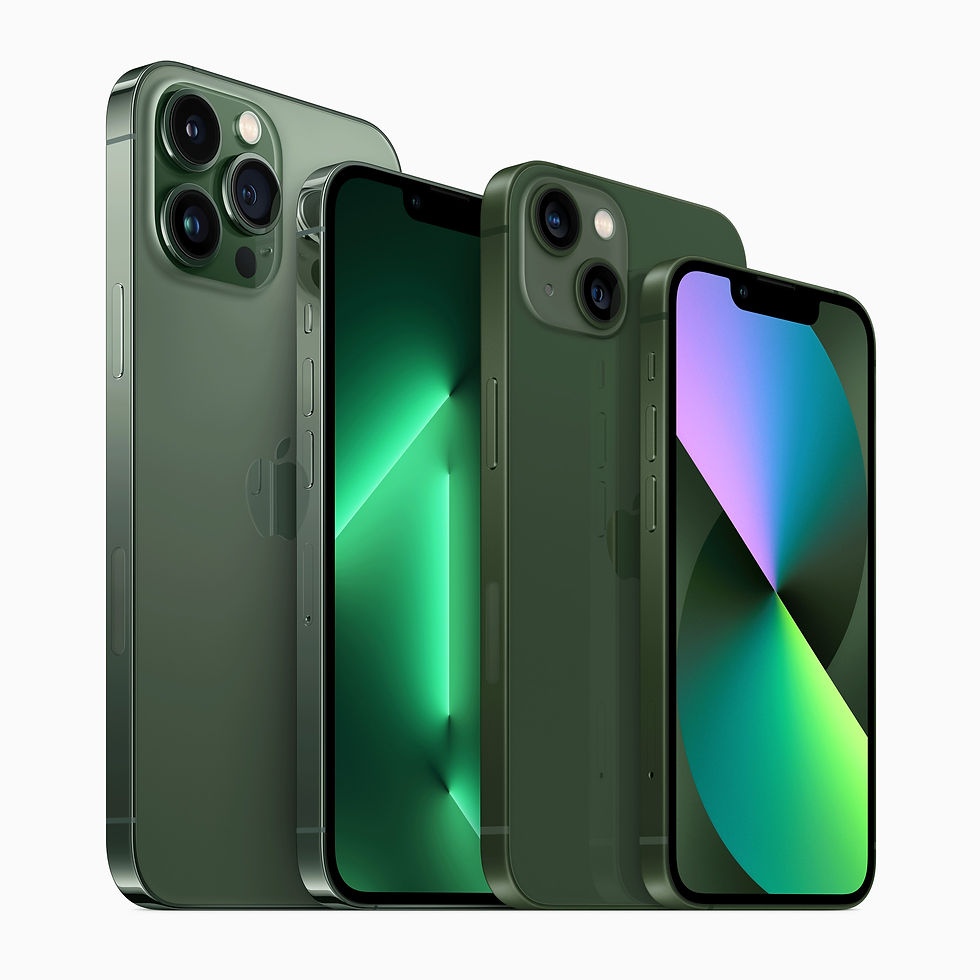
Cast your mind back to phones like the iPhone 13 or the Samsung Galaxy S21. They arrived in bold, playful colours, their triple-camera setups still relatively modest in size. Fast forward to today and the palette has dulled. Grey and white dominate, black if you are lucky, with the occasional anomaly like Apple’s latest orange. Camera modules, meanwhile, have grown dramatically, and to be fair, the results have improved.
Battery life and durability, once headline features, have faded into the background. Software has taken centre stage. That shift alone says a lot about where the industry believes value now lies.
A great deal has changed, and a great deal more is still changing. These are 3 key trends shaping the current smartphone landscape.
1. Folding Phones

Folding phones are a category I have never fully warmed to, and judging by adoption rates, neither has the wider public. They are not yet at the point where everyone’s mother owns one, but there is no denying that they are steadily growing.
We have seen the category evolve in stages. First came the flip-style foldables, followed by the booklet-style phones that open into a small tablet. Now, we are entering the era of the trifold. While this latest format still feels more like a novelty than a necessity, the fact that brands like Huawei, and now Samsung, are willing to bring such devices to market shows that interest in folding phones is increasing rather than fading.
And the clearest signal of this growth is Apple. The company is reportedly preparing to unveil its first folding iPhone this year. Historically, Apple only enters a category once it believes the technology is mature enough and commercially viable, so its involvement alone suggests foldables are moving beyond experimentation.
That said, folding phones still come with significant compromises. Price remains the biggest barrier, with foldables sitting well above traditional flagship devices. Then there is the crease, an unavoidable visual reminder that the screen bends. Beyond that, many users simply do not have daily tasks that suddenly require a larger display, especially when they already own a tablet or laptop.
Design constraints also play a role. Because folding phones need to be thin, they struggle to match traditional flagships in areas like camera performance and battery capacity. These trade-offs make them feel like a technological showcase rather than a no-compromise device.
Despite all of this, folding phones are improving year by year, and more manufacturers are jumping on the trend. Whether they become truly mainstream remains to be seen, but their continued evolution is now impossible to ignore.
2. Staggered Releases

Last year, Apple did something genuinely surprising. Instead of sticking to its long-standing September launch window, it unveiled the iPhone 16e at the start of the year. For a company that thrives on predictability, this was a notable shift.
According to several well-known leakers, Apple is planning to do this again, but on a much bigger scale. Rather than introducing an iPhone 17e, the reports suggest Apple could launch the iPhone 18 Pro lineup first, followed later by the iPhone 18. If this happens, it would mark a major change in how Apple structures its product cycle.
The reasoning behind this move is not officially known. However, staggered releases are nothing new in the wider smartphone world. Brands like Samsung, Oppo and Huawei have long spread their launches across the year, keeping attention on their products beyond a single flagship moment. Apple adopting this approach would simply bring it in line with industry norms.
There is also a branding advantage. A staggered release means Apple no longer owns just September, but multiple moments throughout the year. Each launch becomes its own event, keeping Apple in headlines more consistently rather than concentrating all attention into a single month.
If Apple commits to this approach, it is likely to set a wider trend. Once Apple moves, the rest of the industry usually follows, and we could soon see phone launches becoming a year-round affair rather than a once-a-year spectacle.
3. The Unwanted Middle Child
Samsung makes phones, a lot of phones. There is the S series at the top, the A series covering a wide range of budget devices, the F and M series filling in regional and price gaps, and the Z series handling all things folding. Choice has never been Samsung’s problem. If anything, too much choice is part of the brand’s identity.
Oppo follows a clearer structure. The Find X sits at the premium end, while the Reno series covers the midrange. It is not minimal, but it is understandable.
Apple, on the other hand, built its success on simplicity. For years, the iPhone lineup was easy to grasp. There was a base model and two Pro models. Occasionally, a smaller or larger option sat alongside them. That middle space, however, has been a problem for Apple for a long time.

The Mini did not land. The Plus did not land either. Both struggled to justify their existence next to the base and Pro models, and both were quietly pushed aside. Now comes the Air, and early signs suggest it is following the same path. It sits in that same awkward middle lane, trying to be different without offering a compelling reason to exist.

Samsung has now followed a similar route with the Edge, and other brands are circling the same idea. The obsession has become the anomaly phone. The thin one. The one that exists mainly to say it is thin.
This marks a strange shift in priorities. Thinness has not been a real buying motivator for years. People care about battery life, cameras, performance and longevity. A phone being marginally thinner rarely changes the daily experience in a meaningful way, especially when it often comes with compromises elsewhere.
Yet brands continue to chase this trend, experimenting with models that do not clearly fit into their lineups. It feels less like innovation and more like uncertainty. A sign that manufacturers are searching for differentiation in a market where real, meaningful changes have become harder to deliver.
Where Phones Go From Here
Looking at these trends together, it is clear that the smartphone industry is in a strange in-between phase. Innovation has not stopped, but it has shifted. Instead of dramatic leaps, we are seeing brands experiment, reposition and sometimes overcorrect in search of the next big thing.
Phones have matured, and with that maturity comes a slower, more incremental pace of change. The next few years will likely be less about spectacle and more about refinement, clarity and restraint. The brands that get it right will be the ones that stop chasing novelty for its own sake and focus on making phones that simply make sense to live with, day in and day out.


