


Rise in Malaria Deaths in Gauteng Raises Public Health Concern


On the 19th of April 2026, the Gauteng Department of Health released a media statement addressing the reported rise in malaria deaths in Gauteng, citing delayed diagnosis and travel as key contributing factors.
As malaria cases continue to rise in Gauteng, a more pressing concern emerges. Rising infections are accompanied by the increased number of deaths from a disease that is preventable and treatable. Between January and March 2026, 414 cases were confirmed and 11 deaths were recorded, in comparison to the 230 cases and one death during the same period in 2025. The Gauteng Department of Health described this as a “worrying rise in both malaria infections and fatalities.”
While travelling to malaria-endemic areas remains a key driver of these infections, according to the department’s statement, this does not fully explain the increase in deaths. The department further stated that delayed diagnosis and treatment can lead to severe illness, particularly when early symptoms such as fever and headaches are not recognised.
A recent malaria risk map based on data from the National Institute for Communicable Diseases places Gauteng outside of South Africa’s malaria-endemic zones, with transmission largely concentrated in Limpopo, Mpumalanga, and parts of KwaZulu-Natal. This further signifies that most cases in Gauteng are imported rather than locally transmitted.
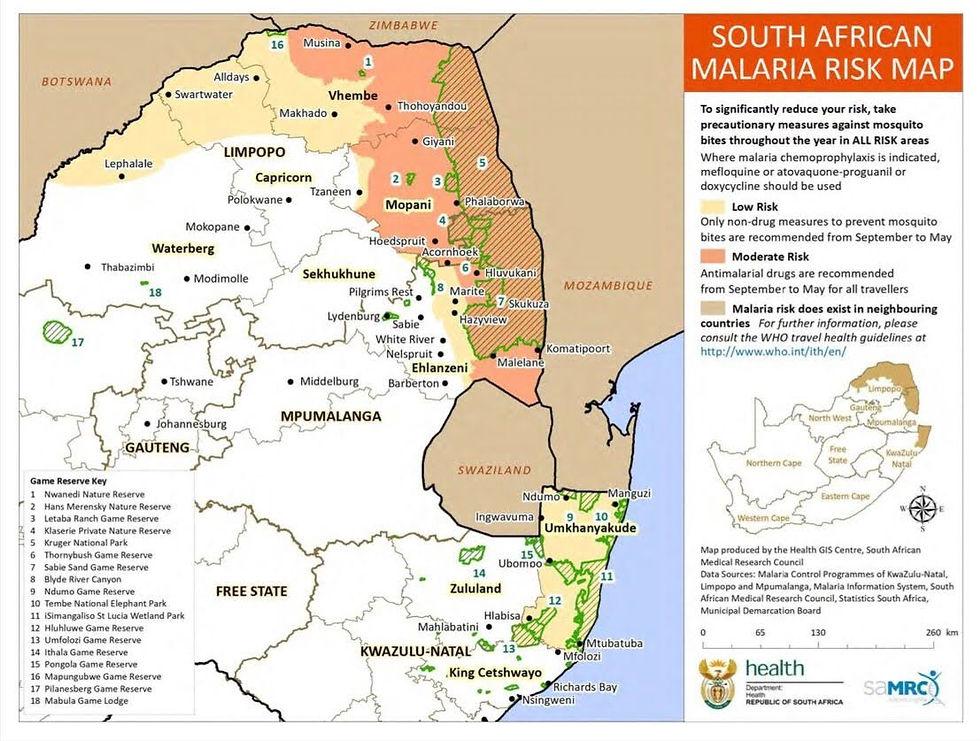
Malaria Risk Map for South Africa (March 2026). Source: National Institute for Communicable Diseases (NICD) and the National Department of Health, South Africa; adapted by Gecko Lodge.
This raises a critical question: if malaria transmission is not occurring locally, why are more people dying from it, considering the fact that it is treatable?
While the Department of Health has attributed the rise in cases to travel in and out of malaria-endemic areas, the number of fatalities suggests that the challenge goes beyond exposure. Even when infection occurs outside the province, survival often depends on how quickly the disease is identified and treated once patients present at healthcare facilities.
According to the Gauteng Department of Health, “there are people who continue to travel to endemic areas and do not take malaria chemoprophylaxis due to reasons known to them… some patients come seeking help when the malaria disease has advanced and symptoms are worse.”
The increase in deaths highlights the consequences of delayed care and the importance of prevention and early medical attention in reducing avoidable fatalities.


