


MG HS Car Review: This Might Be the Smartest Family SUV Buy

Updated: Jan 26

We’ve seen a tidal wave of Chinese cars hit South Africa lately, and I found myself in yet another one: the MG HS. Like most Chinese SUVs, it has those polarising looks: you either love it or you absolutely don’t. I sit firmly on the “I actually like this” side. At a glance, it blends in with the rest of the SUV crowd, nothing wild, nothing outrageous.
But here’s where my personal vendetta kicks in. Not against China, but against the engines. Specifically, the 1.5-litre turbo petrol engines that every second brand seems obsessed with. They’re notorious for lag, and as someone who is a spirited driver, I’ll be honest… I wasn’t exactly excited about stepping into yet another 1.5-turbo anything.
Exterior: Polarising Looks
The MG HS immediately commands attention on the road, striking a balance between sporty and imposing. Its wedge-like front end, dominated by a huge grille paired with aggressive headlights, gives it a presence that sets it apart from most SUVs in its segment. I still remember driving past a Sterling Silver HS, a shade reminiscent of champagne, and thinking, huh, this car actually looks pretty good.
At the rear, MG’s signature “Shard” taillight design, three triangles facing each other, adds a modern, distinctive touch that really pops. Our test car was finished in Rover Grey, a subtle metallic shade that reveals sparkly elements up close, giving it an unexpectedly premium feel.
The 18-inch, five-spoke wheels complement the car’s stance, while carbon-fibre-effect door rails introduce a sporty flair rarely seen in this class. Additional touches like chrome accents and a rear diffuser-inspired element (though not a functional diffuser) further elevate the design, making the HS one of the most visually interesting Chinese SUVs currently in South Africa.
Interior: Space for Days
For what you pay, the MG HS interior is surprisingly impressive. It’s not about luxury or premium materials, but rather about space and usability, one of the biggest reasons I love this car. Step inside and you immediately notice the roomy cabin, with generous headroom and legroom for both front and rear passengers. In fact, the rear seats are exceptionally spacious, probably the roomiest back seat I’ve experienced in this segment. There’s no transmission tunnel bump to contend with, so passengers can really stretch out their legs and ride comfortably even on longer journeys.
The interior continues the modern SUV trend with a giant touchscreen and minimal physical buttons, keeping things clean and uncluttered. The flat-top, flat-bottom steering wheel is a standout, wrapped in soft leather and comfortable to hold, perfectly complementing the car’s sporty nature.

A panoramic sunroof floods the cabin with light, making it feel even more spacious. There’s plenty of practical storage: bottle holders, cubbies, and compartments in logical places, so everything has a home. The seats are well-cushioned with tasteful accent stitching, adding subtle visual interest.

Even though much of the interior is plastic, it’s mostly soft to the touch where it matters, with no rough textures in areas you regularly contact. Overall, the cabin strikes a great balance between comfort, practicality, and a sporty feel, you can easily feel at home here, whether commuting or heading out on a weekend trip.
Tech & Features: Sometimes Too Little, Sometimes Too Much

When it comes to tech, this car sits in an odd middle ground where there’s both too much and too little at the same time. The industry standard has become straightforward: Apple CarPlay and Android Auto, preferably wireless. This car technically offers both, but only through a small USB dongle that plugs into the ports and then connects to your phone. To its credit, it works more reliably than many wireless systems in far pricier cars, but it’s still a tiny, easy-to-misplace device that feels like an unnecessary extra step.
Inside, you get two 12.3-inch screens and a strip of physical controls for basic climate adjustments. Anything more detailed requires digging into the touchscreen, which grows tiresome quickly. And that sets the tone for much of the tech experience. The car has a full suite of advanced driver assistance systems that look impressive on paper, yet the execution often feels intrusive. Driving it can feel like dealing with a strict instructor constantly issuing reminders, warnings, and instructions.
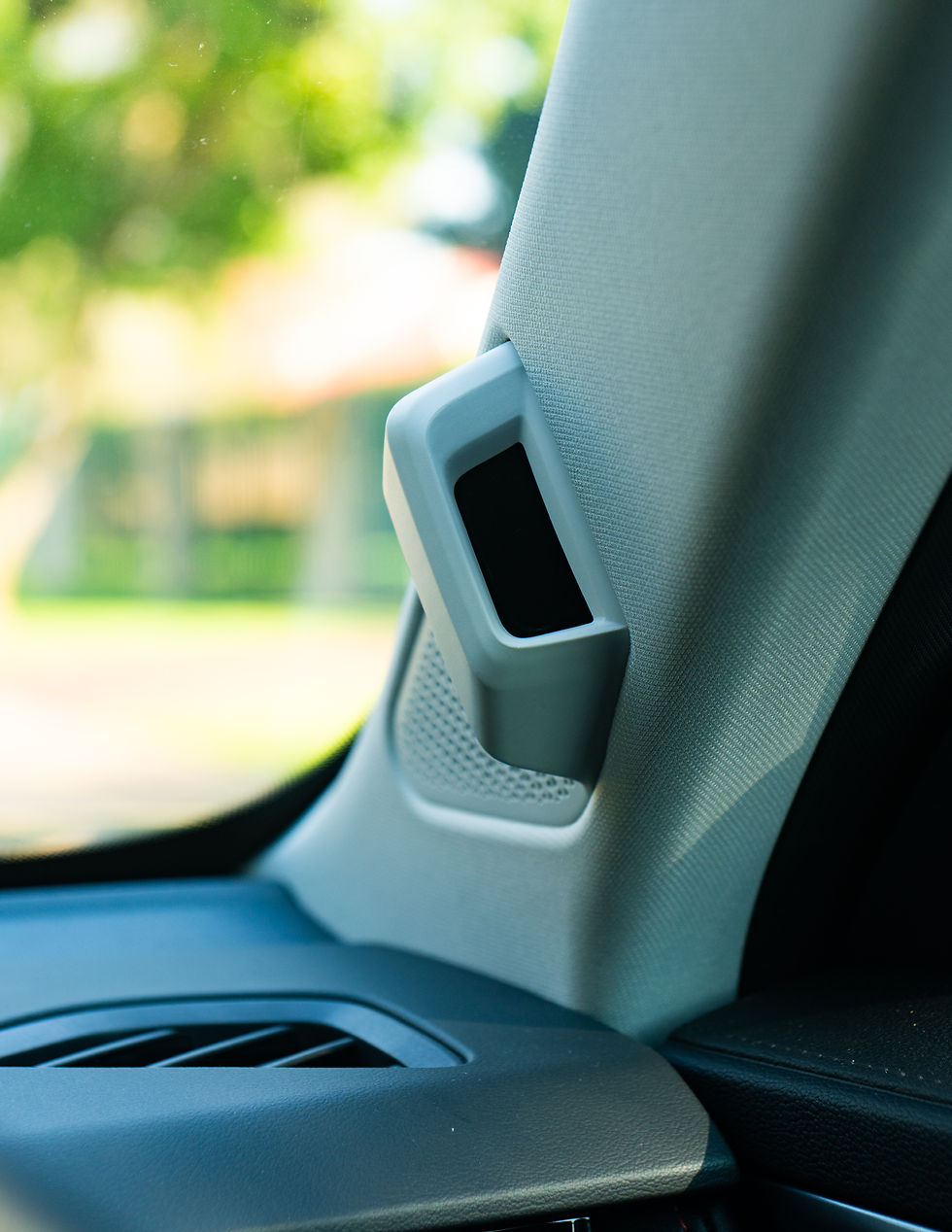
A sensor on the A-pillar monitors your attention, which is fine in principle, and the array of cameras provides 360-degree visibility and blind-spot monitoring, which is equally welcome. Where things fall apart is the road-sign recognition. It refreshes slowly, so you may leave a 60 km/h residential area, join a 120 km/h highway, and still have the car insisting you’re over the limit until it physically reads the next sign. The delay leads to unnecessary alerts and undermines the system’s purpose. A bit of calibration would go a long way.
There are other peculiar omissions. The car only offers USB-A ports, not USB-C, even though it does include wireless charging. There’s no clearly visible volume knob or switch, and while you can manage it through the steering wheel, the controls aren’t immediately intuitive.
All these systems can be switched off if you prefer a quieter, less supervised drive. The catch is that everything resets after each trip, meaning you’ll need to disable your least favourite features every time you start the car. It’s a reminder that the technology is abundant, but not always aligned with a smooth or enjoyable driving experience.
Performance & Drive: Well Balanced

As you might know by now, I’m a spirited driver, and I rarely get excited when a 1.5-litre turbocharged engine is involved, especially from the typical Chinese line-up. They’re usually sluggish, laggy, and confused when it comes to gear changes. I didn’t expect much from the MG HS until I found out this wasn’t the usual 115 kW setup. The HS produces 125 kW (168 hp) and 275 Nm of torque, and there’s even a 2.0-litre option with 170 kW for those who want more power on tap.

This version genuinely surprised me. It drives better than most vehicles from the Chinese competitors, and while MG sits under a Chinese parent company, the brand’s British roots show. The dynamics feel more thought-through. The gearbox knows what it's doing, the turbo lag is noticeably reduced, and the entire driving experience feels far more composed.

The steering can be adjusted between Comfort and Sport, which alters the weight rather than the drivetrain behaviour. In Comfort, the steering is light and nimble, making the HS easy to manoeuvre in tight spaces. Braking takes a bit of getting used to, as the pedal feel is on the grabby side, especially at lower speeds.
Ride comfort is another highlight. MG added sound deadening to this model, and it shows. It filters out a lot of exterior noise, and the suspension deals well with everyday bumps and imperfections, making it a smooth place to spend time. It’s a more refined drive than you’d expect in this segment.
Fuel consumption also impressed me. I averaged between 7.2 and 7.9 L/100 km in urban driving, and that figure easily dropped below 7 L/100 km on the highway. It’s a noticeably more efficient package when compared with many of the HS’s Chinese rivals.
Price & Verdict

The MG HS range offers four models. The line-up starts with the 1.5 DCT Comfort at R499 900, followed by the 1.5 DCT Luxury at R534 900. Above that sits the 2.0 AT Comfort at R629 900, and the flagship 2.0 AT Luxury at R665 900. While the Jetour Dashing may come in at a lower starting price, the HS positions itself as the stronger overall purchase.

This is a genuinely compelling family car. The rear legroom alone makes long trips far easier, and the cabin offers enough comfort and small touches of luxury to keep everyone happy. There’s enough power for enjoyable open-road driving, and the styling feels modern enough that you won’t regret choosing it over rivals. It is a vehicle that delivers value in the areas that matter most to everyday buyers.
Final Scorecard: 7.7/10
Category | Rating out of 10 | Notes |
Design | 7 | Modern and sporty with distinctive lighting and a strong road presence. |
Performance | 8 | Noticeably better dynamics than most rivals with improved power delivery and respectable fuel economy. |
Tech & Features | 6.5 | Generous tech offering, though inconsistent execution and missing expected conveniences drag it down. |
Drive | 9 | Exceptionally comfortable cabin, impressive rear space, refined ride, and confident steering behaviour. |
Price | 8 | Strong pricing versus competitors with a compelling mix of comfort, space, and overall usability. |


