


Why Is AI Everywhere? and Often Unnecessary

Updated: Feb 9

Yes, AI. Just a few years ago it popped up as that one thing you could use instead of a Google search to get a more personalised answer, and now it’s everywhere. There’s ChatGPT, Grok, Perplexity, Deepseek, Gemini and many others. They generate images, videos, plan your entire vacation and essentially do anything you ask. What once felt like a step into the future is now, quite frankly, obnoxiously in your face all the time.
I liken AI to puberty. Before you reach it, you hear about how your body changes, muscles develop, your voice gets deeper and you get that growth spurt. It all sounds great. Then it finally arrives and while you do get the good stuff, you also get pimples, hair everywhere, oily skin and sweat. Suddenly, the bad starts to outshine the good. That’s how I see AI. It was quirky and exciting at first, but now it’s everywhere, whether you asked for it or not.
AI in Phones

At the end of 2024, Apple unveiled the iPhone 16 lineup and the entire presentation revolved around what Apple Intelligence could do. These were phones “built for Apple Intelligence”, with more RAM added purely to support it. Fast forward to today and Apple Intelligence never really took off. Their 'circle to search' feature is still clumsy, and beyond generating a few custom emojis, there isn’t much to show for it.
Now, when AI makes headlines, Apple is often seen as the company playing catch-up. Gone are the days when a phone was criticised simply for not being good enough. The iPhone 16 Pro Max is, objectively, a great phone. But because its headline feature was AI, and that AI turned out to be a bust, the device is remembered more for what Apple Intelligence failed to deliver than for everything it actually does well. The AI conversation has become so dominant that it overshadows the product itself.
AI in Cars
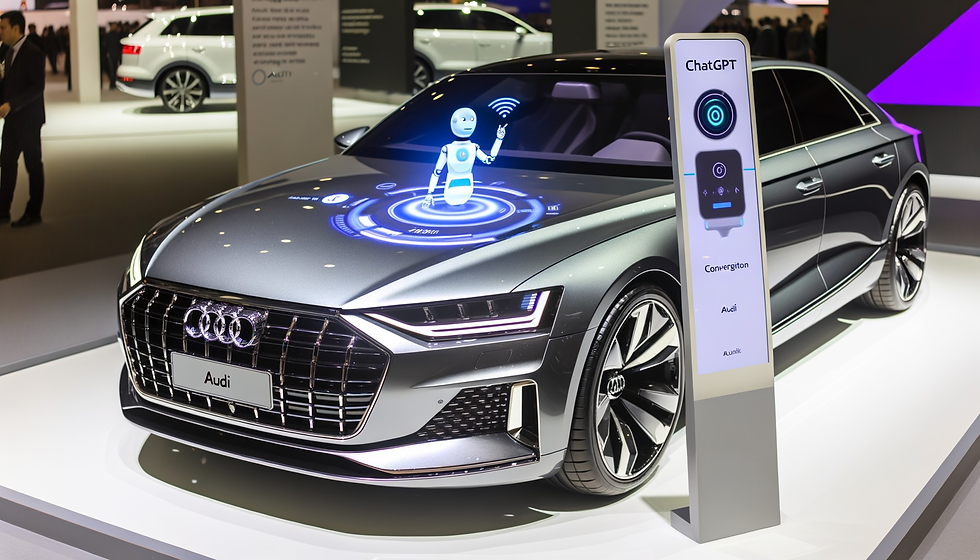
Who would’ve thought we’d see AI in cars, but here we are. Instead of tapping a few buttons to set the temperature or pressing one switch to open the sunroof, you can now talk to your car and hope it listens. If you’re driving and chatting to someone and happen to mention the name of your car, nine times out of ten a voice pipes up asking what it can do for you.
For many people, cars are an escape. Some go out for a drive to clear their head, others enjoy the simple thrill of being in a fast car and putting their foot down. Today, that experience is increasingly filtered through large screens and an AI assistant that’s always waiting to do something for you. Brands like Audi have even integrated ChatGPT directly into their vehicles.
When people say AI is everywhere, this is what they mean. It has made its way into places where you wouldn’t expect it, and in some cases, places where you never really wanted it in the first place.
AI in Banking

This is where things get touchy. You open your banking app and there’s a chatbot waiting to read all your information and then hand it back to you, instead of you simply looking at it yourself. AI in banking feels like someone looking over your shoulder while you check your account. To me, at least, that’s exactly what it feels like.
Discovery Bank has leaned fully into this, dubbing its AI features the future of banking. You can ask it to summarise where you spend the most money, track habits and surface insights that would otherwise take time to work out. On paper, it sounds useful, and in some ways it is. Convenience has always been the selling point.
But when you start thinking about how AI has also been known to behave unpredictably, or how data can be misused, the tone changes quickly. AI in cars is annoying. AI in banking is unsettling. This isn’t just about convenience anymore, it’s about trust, privacy and how comfortable people are with something this powerful sitting so close to their finances.
AI in Medical Records
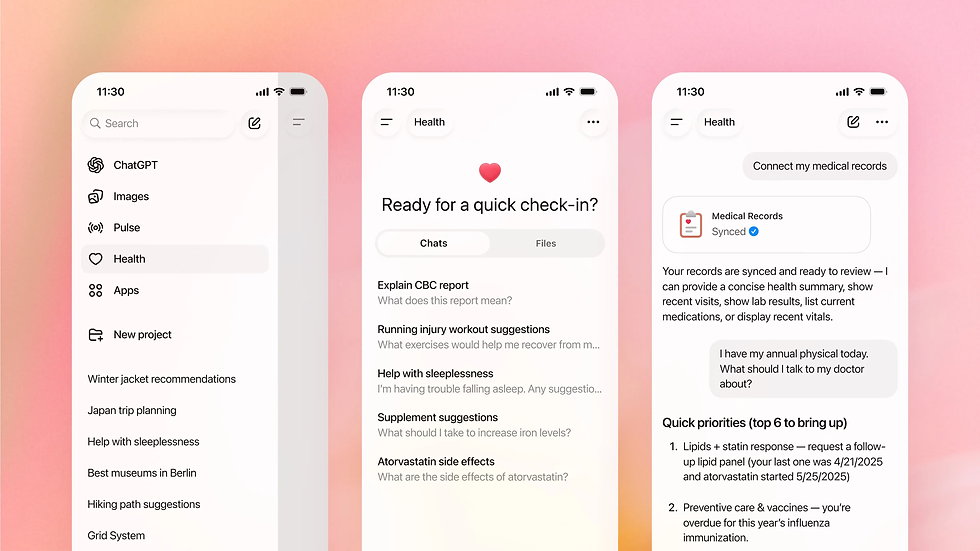
And then it gets worse. Now AI doesn’t just pop up in search bars and cars; it’s being given the opportunity to access your health records and interpret them back to you. As if typing “what does this blood result mean” into Google wasn’t already alarming enough, now an AI can connect directly to your medical history and wellness apps, including Apple Health, MyFitnessPal and others. The brain behind this is ChatGPT Health, a dedicated feature designed to bring your health information together with AI so it can explain trends, test results or even help you prepare for doctor appointments.
The official line from OpenAI is that this feature is designed to support, not replace medical care and that it uses encrypted, compartmentalised spaces so your data stays separate and secure. But context or no context, this still feels unsettling. The same technology that has been in the news for undressing people and hallucinating wild things now has the potential to hold access to the most intimate details of your body; your medical history, biometric trends, lab results, sleep patterns, blood pressure, heart rate and more, if you allow it.
Instead of just giving you general information, ChatGPT Health lets you connect your own records and tailor responses based on your personal data. On the surface, that sounds useful; understanding your own health patterns or prepping for a doctor’s visit is something many people struggle with. But when the same models that sometimes make up answers or misunderstand context are given access to deeply personal health data, it crosses a line that many people find hard to ignore.
It raises very real questions about privacy, trust and how comfortable we are with machines having access to data that was once considered strictly personal. The promise of tailored insights is one thing, but the idea of a bot holding a window into your most vulnerable information is, for a lot of us, something far more unsettling than any convenience it claims to offer.
The Awkward Phase of an Inevitable Technology
AI isn’t going anywhere. Just like puberty, once it arrives, you’re stuck with it; pimples, awkward phases and all. What started as a genuinely useful tool has now become something companies feel obligated to bolt onto everything, whether it improves the experience or not. Phones are sold on AI features that barely work, cars talk when no one asked them to, banks want to “help” by watching your money, and now AI is peering into your health records.
The problem isn’t AI itself. At its best, it’s impressive, efficient and genuinely helpful. The issue is saturation and forced relevance. Somewhere along the line, “this could be useful” turned into “this must exist or the product has failed.” And that’s how we ended up with AI everywhere, not because people demanded it, but because brands are terrified of being seen as behind.


